
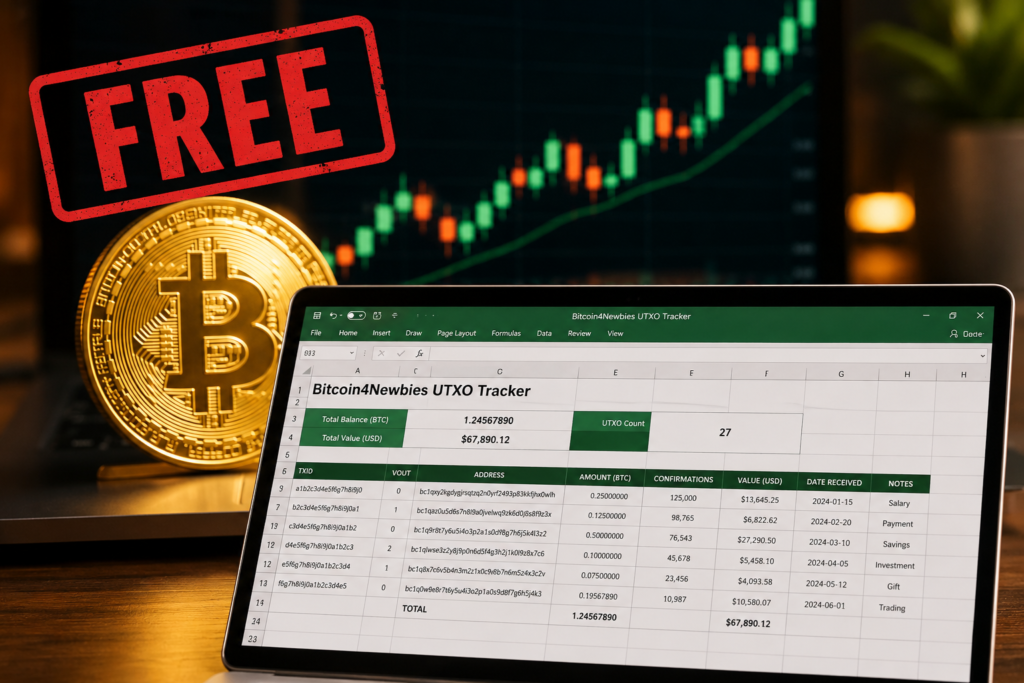
If you own Bitcoin, even just a little, you own UTXOs. And if you don’t know what a UTXO is, or you’ve never tracked them, this post is for you.
Today we’re giving away a free tool to help you do exactly that.
What Is a UTXO — and Why Should You Care?
UTXO stands for Unspent Transaction Output. In plain English, it’s a chunk of Bitcoin you received that you haven’t spent yet.
Think of it like this: when you receive Bitcoin, you don’t get one big balance like a bank account. You get individual UTXOs, each with its own history, origin, and privacy implications.
Most Bitcoin holders don’t know how many UTXOs they own, where they came from, or what that means for their privacy and taxes. That’s exactly the kind of gap Bitcoin4Newbies was built to fill.
Introducing the Bitcoin4Newbies UTXO Tracker
We built this free spreadsheet specifically for beginner and intermediate Bitcoin holders who want to:
- Know exactly what Bitcoin they own and where it came from
- Understand the difference between KYC and No-KYC UTXOs
- Track the cost basis of every UTXO for tax purposes
- Make smarter decisions about which UTXO to spend and when
What’s Inside the Spreadsheet
Sheet 1: The UTXO Tracker: The main tracking sheet for logging every Bitcoin you receive. Columns include Transaction ID; Date received; Amount in BTC and Satoshis (auto-calculated); whether it’s a change output; fees paid in both Sats and USD; KYC status (KYC / No-KYC / Unknown); Source type (Exchange, P2P, Bitcoin ATM, Mining, or Gift); your personal label and notes; BTC price at receipt (your cost basis); value at receipt (auto-calculated); current estimated value; status (Unspent / Spent / Partially Spent); storage location; and spending notes.
Sheet 2: Is a KYC vs No-KYC Guide. This is a plain-English explanation of what KYC means, why it matters for your privacy, the golden rules of UTXO management, and definitions for every column in the tracker.
Sheet 3: The Summary Dashboard auto-calculates your total Bitcoin holdings, cost basis, current value, unrealized gain or loss, and fees paid, split separately between KYC and Non-KYC Bitcoin.
Why KYC vs No-KYC Matters
When you buy Bitcoin on an exchange like Coinbase or Strike, your identity is permanently linked to those UTXOs on the blockchain. That’s KYC Bitcoin.
Non-KYC Bitcoin: When purchased peer-to-peer, at certain ATMs, or earned through mining, it is not linked to your identity. It preserves your financial privacy in ways KYC Bitcoin simply cannot.
The golden rule: never mix KYC and No-KYC UTXOs in the same transaction. Doing so permanently links your identity to your private coins and could lead to security issues for you and your Bitcoin holdings. There are nefarious actors everywhere.
The UTXO Tracker helps you keep them clearly separated so you always know what you’re spending — and what the implications are.
How to Use It
- Download the spreadsheet below
- Open it in Microsoft Excel or Google Sheets
- Delete the three sample rows
- Start logging every Bitcoin you receive
- Use the dropdown menus to classify each UTXO
- Check the Summary Dashboard anytime to see your full picture
No download required. Opens directly in Google Sheets. Click File → Make a Copy to save your own editable version.
Have questions about UTXOs or the tracker? Hit the Contact page or reply to any newsletter email — Randall reads every one.
Want to Go Deeper?
This spreadsheet was inspired by The Jar on the Counter: A Beginner’s Guide to Bitcoin UTXOs, a plain-English book written for anyone who self-custodies Bitcoin or plans to.
The book covers everything from what UTXOs are to how they affect your Lightning Network experience to how to build a UTXO structure that serves you for decades.
Order a Signed Copy — $24.99
Want more plain-English Bitcoin guides? Subscribe to the Bitcoin4Newbies Newsletter for weekly updates.